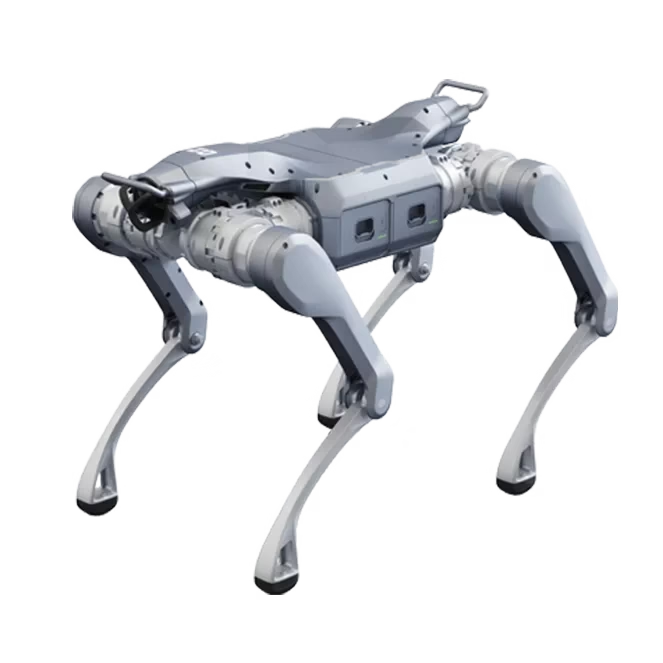
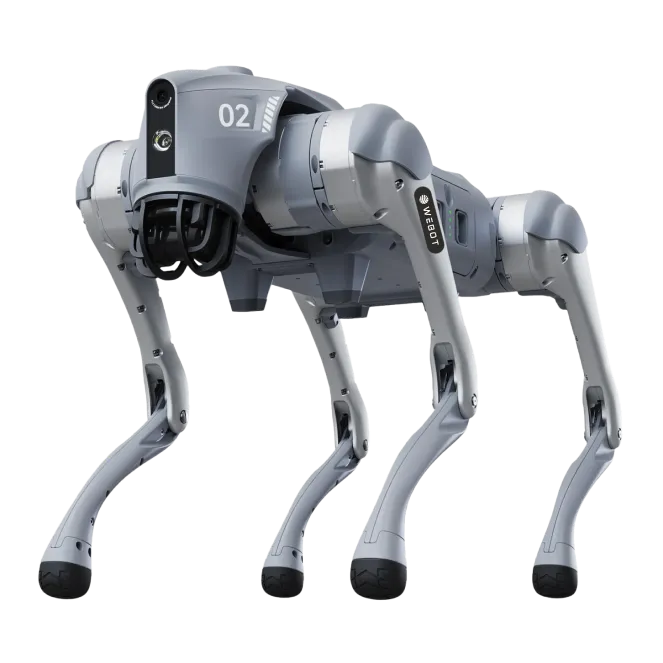
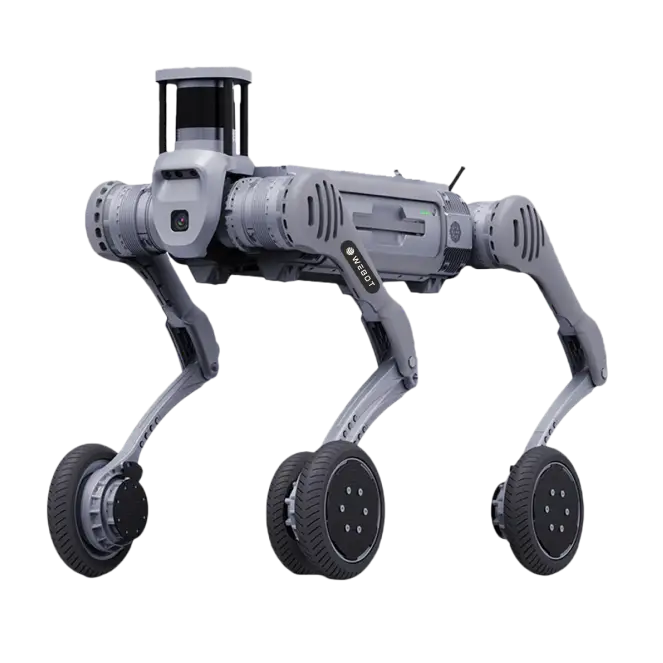
A dog robot, sometimes called a robot dog orquadroped, is a self-propelled machine that moves on four legs. It is designed to navigate environments where wheels or tracks are not sufficient. The idea is to mimic certain aspects of how a dog moves – not to be a companion animal, but to provide stable and adaptable mobility over uneven terrain, stairs, kerbs, gravel, grass and industrial areas. Using the kinematics of its legs, advanced sensors and real-time control, the dog robot can balance, recover from bumps and plan its steps in difficult environments, something that traditional ground robots often struggle with.
In practice, the quadruped functions as a platform for sensors, cameras and other payloads. It can patrol, inspect, measure, film, carry tools, open doors (if properly equipped) and act as an extension of human vision and presence in places that are dangerous, difficult to reach or simply time-consuming for humans. Many models offer different operating modes: direct remote control (teleoperation), semi-autonomous missions between predefined points (waypoints) and fully autonomous patrols where the robot navigates itself, avoids obstacles and returns to its charging station.
It is important to understand that the term ‘dog’ here refers to the gait (four-legged) and manoeuvrability, not to the robot having feelings or ‘thinking’ like a dog. It uses algorithms, sensor data and motor control – not instincts. For the user, this means that the robot is a tool: reliable in repetitive tasks, predictable within its limitations, and possible to document, measure, and quality assure. That is why dog robots are used in industry, construction, energy, mining, rescue services, research, and education, but also in the media and public communication about how robots can develop a sense of their body and spatial awareness.
They use software that combines control theory, perception, planning and sometimes machine learning to translate their surroundings into stable gait and meaningful actions. In short, a dog robot is a robust and intelligent mobile platform that carries sensors and tools to places where humans may not always want or should be. It does this with a combination of safe foot placement, autonomous navigation and data-driven precision.