


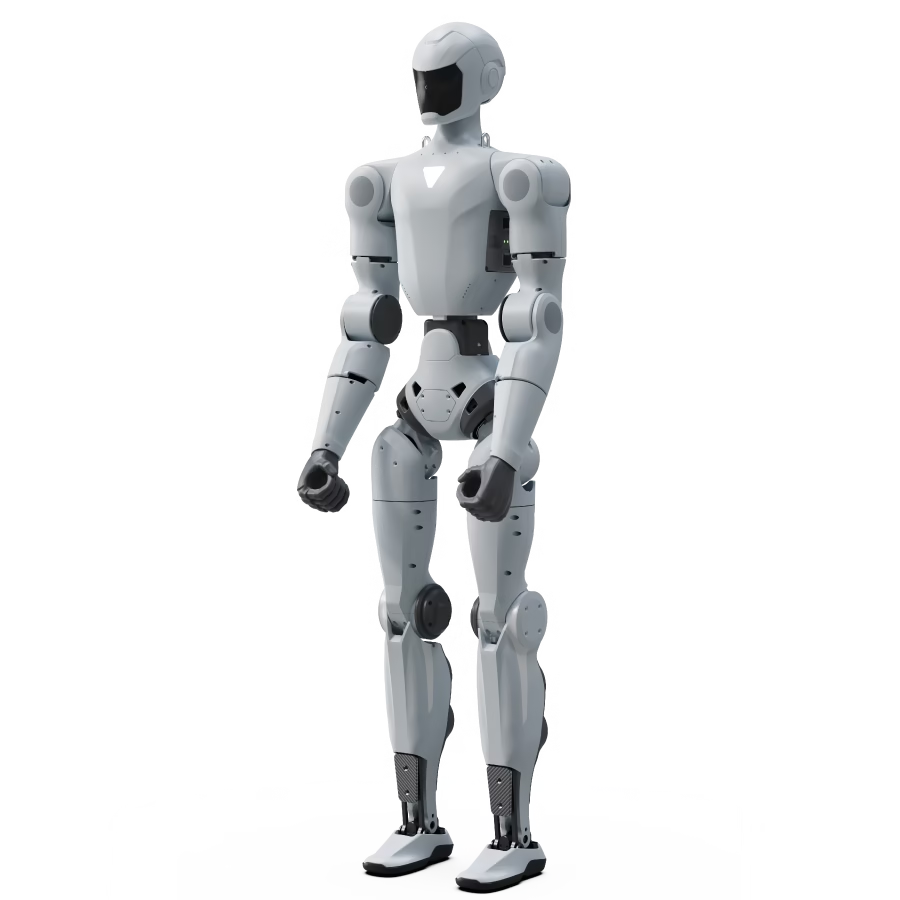
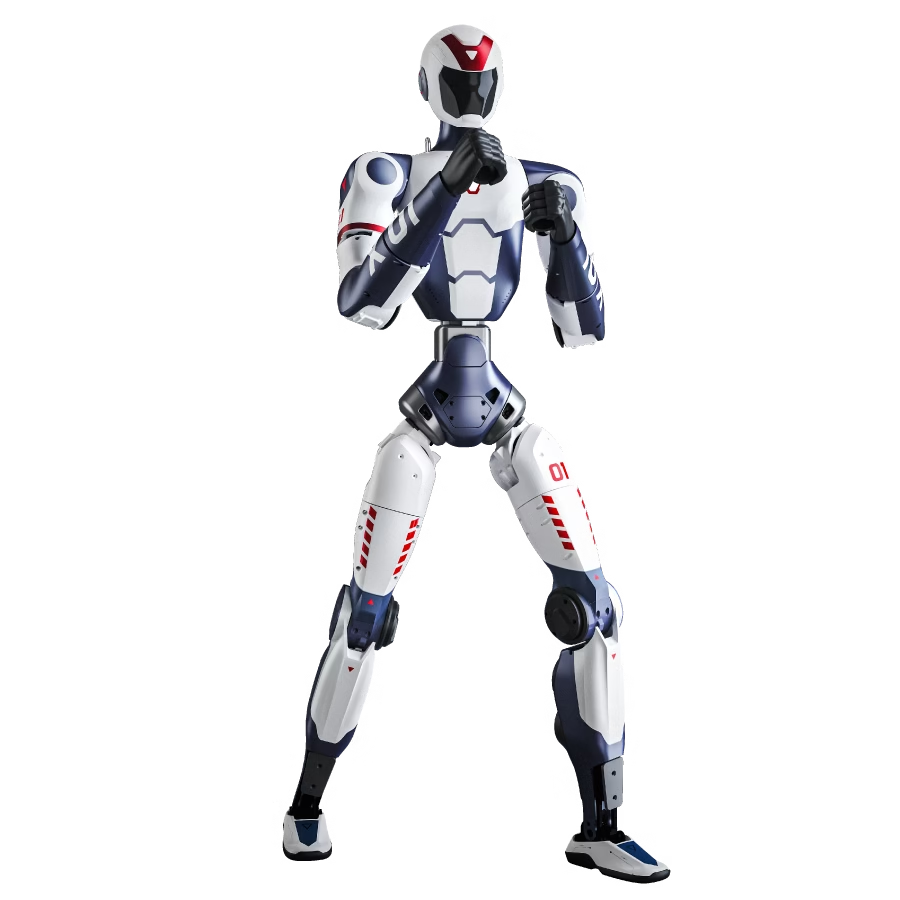
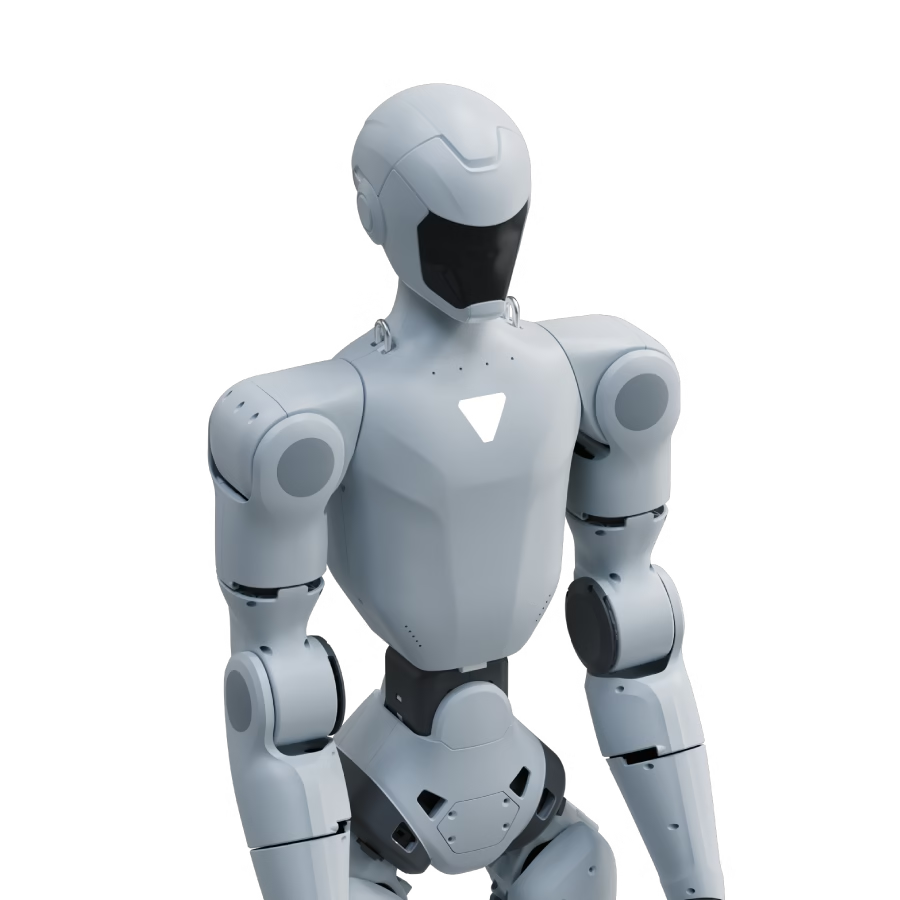
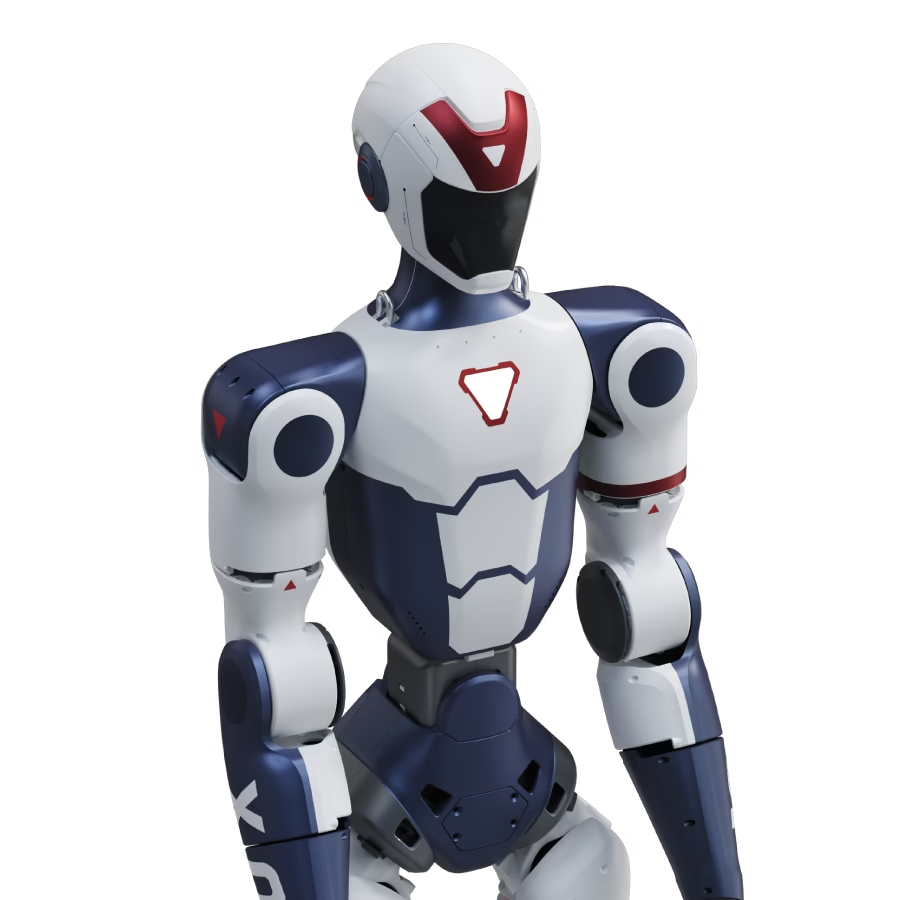
Unitree R1 is a humanoid robot designed to perform complex tasks with precision. With its advanced AI and motion sensors, the R1 can adapt and interact with its surroundings, making it an ideal solution for tasks that require flexibility and accuracy in diverse environments.
| Specification | R1 | R1 EDU |
|---|---|---|
| Dimensions & Weight | ||
| Height, Width and Thickness (Stand) | 1210 × 357 × 190 mm | 1210 × 357 × 190 mm |
| Weight (With Battery) | About 25 kg | About 25 kg |
| Calf + Thigh Length | 675 | 675 |
| Forearm + Upper Arm Length | 435 | 435 |
| Degrees of Freedom | ||
| Degree of Freedom (Total Joints) | 24 | 24–40 |
| Single Leg Degrees of Freedom | 6 | 6 |
| Single Arm Degrees of Freedom | 5 | 5 |
| Waist Degrees of Freedom | 2 | 2 |
| Head Degrees of Freedom | — | 2 |
| Dexterous Hand | — | Optional |
| Performance & Joint Motion | ||
| Joint Output Bearing | Crossed roller bearings, Double Hook Ball Bearings | Crossed roller bearings, Double Hook Ball Bearings |
| Joint Motor | Low inertia high-speed internal rotor PMSM (permanent magnet synchronous motor, better response speed and heat dissipation) | Low inertia high-speed internal rotor PMSM (permanent magnet synchronous motor, better response speed and heat dissipation) |
| Maximum Torque of Arm Joint [1] | About 2 kg | About 2 kg |
| Joint Movement Space | Waist Joint: Y±150°, R±30° Knee Joint: −10° to +148° Hip Joint: Y±157°, P −168° to +146°, R −60° to +100° | Waist Joint: Y±150°, R±30° Knee Joint: −10° to +148° Hip Joint: Y±157°, P −168° to +146°, R −60° to +100° |
| Hardware & Systems | ||
| Electrical Routing | Hollow + Internal Routing | Hollow + Internal Routing |
| Joint Encoder | Dual + single encoder | Dual + single encoder |
| Cooling System | Local air cooling | Local air cooling |
| Power Supply | Lithium battery | Lithium battery |
| Compute, Perception & Connectivity | ||
| Basic Computing Power | 8-core high-performance CPU | 8-core high-performance CPU |
| Microphone Array | 4-Mic Array | 4-Mic Array |
| Speaker | YES | YES |
| WiFi & Bluetooth 5.2 | YES | YES |
| Humanoid Binocular Camera | YES | YES |
| High-Power Computing Module | — | NVIDIA Jetson Orin Optional (40–100 TOPS) |
| Battery, Controls & Warranty | ||
| Smart Battery (Quick Release) | YES | YES |
| Charger | YES | YES |
| Manual Controller | YES | YES |
| Battery Life | About 1 h | About 1 h |
| Upgraded Intelligent OTA | YES | YES |
| Secondary Development [2] | — | YES |
| Warranty Period [3] | 8 Months | 12 Months |
[1] The maximum load of the arm varies greatly under different arm extension postures.
[2] For more information, please read the secondary development manual.
[3] For more detailed warranty terms, please read the product warranty brochure.
[4] The above parameters may vary in different scenarios and configurations. Please refer to the actual configuration.
[5] The humanoid robot has a complex structure and extremely powerful output. Users must maintain a sufficient safety distance between the humanoid robot and people. Please use with caution.
[6] If the product appearance changes, please refer to the actual product.
[7] Some sample functions on this page are still being developed and tested and will be made available to users in the future.
[8] The global humanoid robot industry is currently in an early stage of development. Individual users are strongly advised to understand the limitations of humanoid robots thoroughly before purchasing.
[9] This product is a civilian robot. Users must not make dangerous modifications or use the robot in a hazardous manner.
| Configuration | RI, R1 EDU |
|---|
The Unitree R1 is a humanoid robot created for tasks where high precision and sensitivity truly matter. With its impressive range of motion and advanced joint actuators, it can perform movements and angles that match—and sometimes even surpass—human capability. This makes the R1 perfect for fine motor tasks such as assembly, sampling, and quality control. Thanks to its advanced force control and dexterous hands, it can handle delicate objects with a reliable grip, even in demanding work environments. Moreover, the R1 can be trained through imitation and machine learning, allowing it to quickly adapt to new situations and tasks. To enhance its perception of surroundings, the R1 can be equipped with 3D LiDAR and a depth camera, providing it with a 360-degree view that enables safe positioning and operation close to people and equipment. The platform is modular and can be configured to extend joint mobility, further improving both reach and precision. In summary, the R1 is a flexible and precise solution for research, education, and advanced automation tasks where reliability and high accuracy are crucial.
According to the manufacturer, the Unitree R1 is clearly driven by imitation and reinforcement learning. This means that the robot’s control system can be trained both through demonstrations (imitation/behavior cloning) and through reinforcement learning, where it gradually improves its strategies based on feedback from the environment. In practice, this is used to teach the R1 to coordinate balance, gait, and hand movements in a way that closely mimics human motion patterns. This enables it to perform tasks that demand high precision and natural responsiveness in interaction with both people and equipment. The result is an adaptive and intelligent platform for advanced applications, ranging from laboratory automation and test environments to research and education, where new skills can be directly transferred through human demonstrations. In summary, the R1 combines a unique learning capability with technical stability, making it a powerful tool for the workplaces of the future, where human interaction and accuracy are central.
The Unitree R1 humanoid robot is designed to perform tasks with both high accuracy and reliability. Thanks to its advanced technology, the robot’s hands can sense and adjust pressure, allowing it to handle objects gently and precisely. It employs sophisticated control engineering that enables it to adapt its movements to the task, working with the same precision and fine motor skills as a human. This makes the R1 ideal for everything from industrial automation to research and education. Combined with its powerful and position-hybrid control system, along with dexterous hands equipped with tactile sensors, it can not only replicate human movements but also detect and adjust contact forces during gripping, sorting, or assembly. The result is an adaptive and intelligent solution for tasks requiring human interaction and high precision—from laboratory automation and testing environments to educational settings where new skills can be transferred directly through human demonstrations.
The Unitree R1 and Unitree G1 are two humanoid robots from the same manufacturer, but they are designed with different focuses and for different types of applications. The R1 is a compact and lighter model, weighing around 25 kilograms and standing about 1.2 meters tall. The G1 is larger and heavier, with a height of about 1.3 meters and a weight of roughly 35 kilograms. The difference in size and construction makes them suitable for different types of tasks and environments.
Operating time is another clear distinction. The R1 has a battery life of around one hour per charge, while the G1 can operate for up to two hours. In terms of mobility, the R1 has around 26 degrees of freedom in its standard configuration, including 5 degrees of freedom per arm. The G1 offers greater flexibility with between 23 and 43 degrees of freedom depending on the configuration, and its arms can have up to 7 degrees of freedom. This allows the G1 to perform more advanced movements and handle tasks requiring high precision in complex environments.
Sensors and control technology also set the two robots apart. The G1 is equipped with advanced 3D LiDAR, a depth camera, and tactile hands that can detect and adjust contact forces during gripping and assembly. The R1, on the other hand, focuses strongly on interactivity and multimodal AI, with real-time voice and image recognition and OTA updates. In its EDU version, the R1 can also be equipped with more advanced hands and additional sensors for research and educational purposes.
In summary, the R1 is a flexible humanoid best suited for education, research, and projects where interactivity, accessibility, and AI-driven features are central. The G1, by contrast, is better suited for industrial automation, advanced research, and testing environments where longer operating time, more degrees of freedom, and powerful manipulation capabilities are crucial.